Opis
A one-stop guide to teach chemists how to use Python for coding and iterations in a hands-on and practical manner
KEY FEATURES
Understand the core Python functions and algorithms for the computation of chemical parameters.
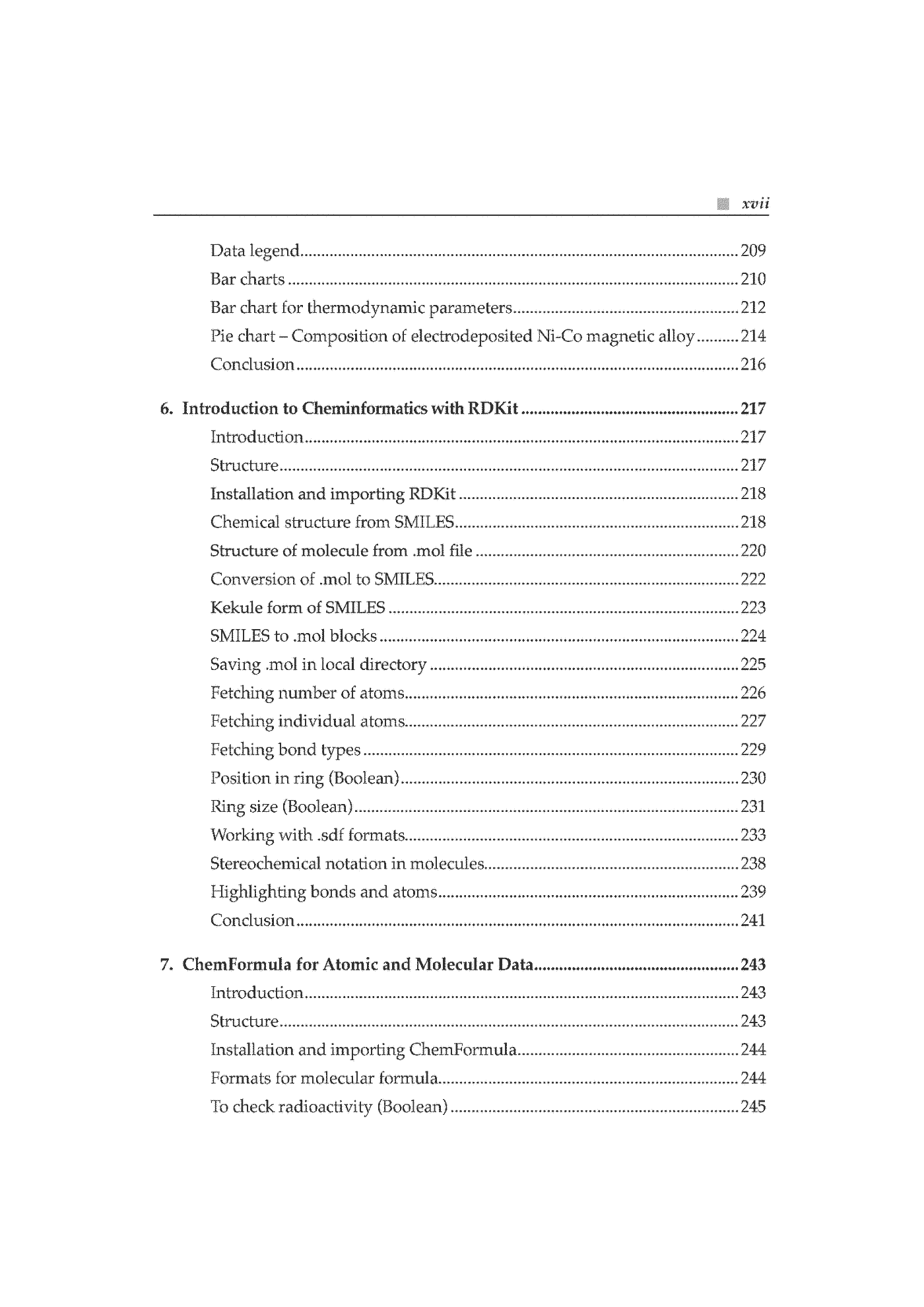
Learn how to use Cheminformatics modules to process and analyze elemental data and molecular structures.
Get familiar with the algorithms for numerical and symbolic computations.
DESCRIPTION
Python is a versatile and powerful computer language without a steep learning curve. It can be deployed to simulate various physicochemical parameters or to analyze complex molecular, bio-molecular, and crystalline structures.
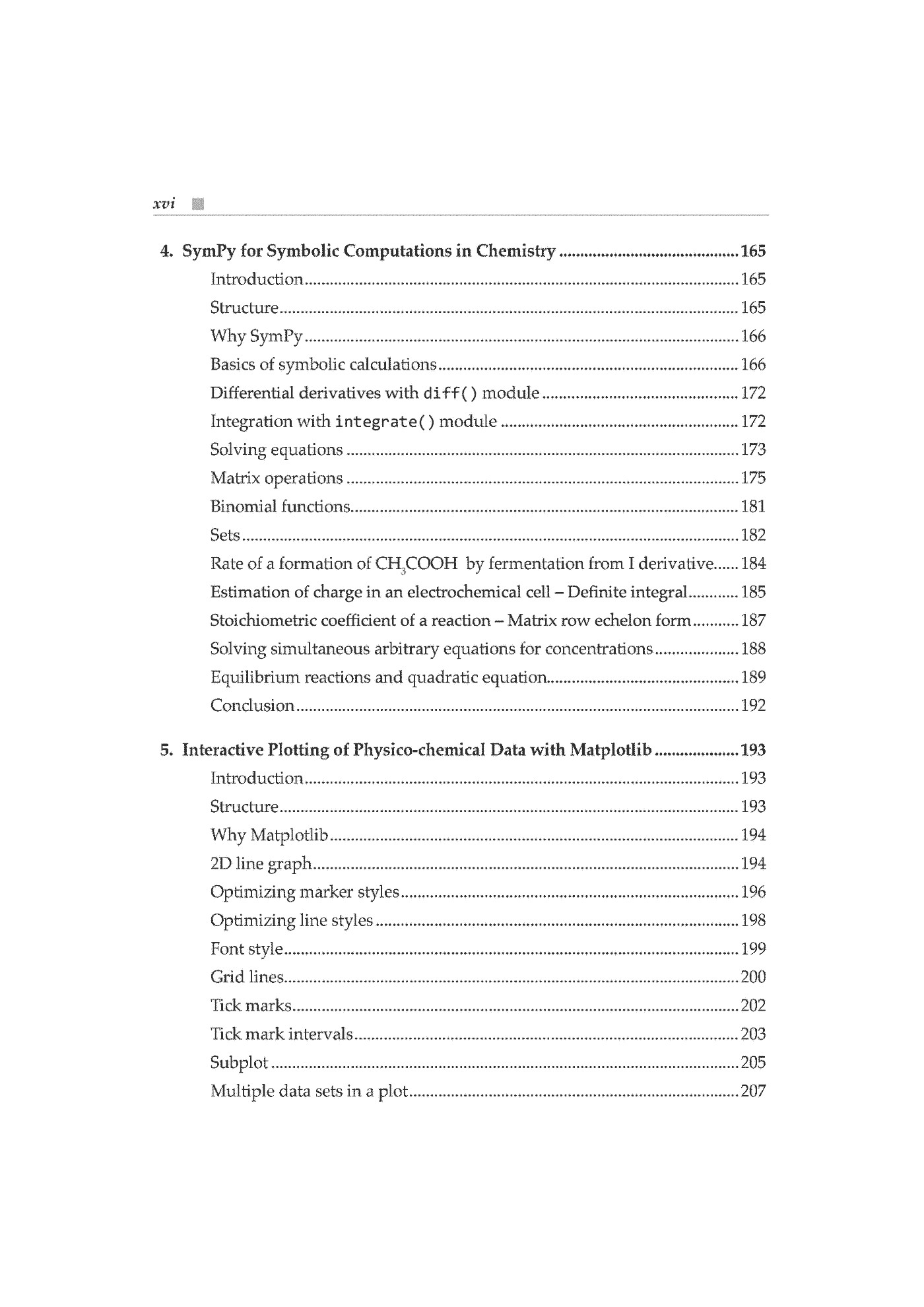
The objective of this book is to give a gentle introduction to Python programming with relevant algorithms, iterations, and basic simulations from a chemists perspective. This book outlines the fundamentals of Python coding through the built-in functions, libraries, and modules as well as with a few selected external packages for physical/materials/inorganic/analytical/organic/ nuclear chemistry in terms of numerical, symbolic, structural, and graphical data analysis using the default, Integrated Development and Learning Environment. You will also learn about the Structural Elucidation of organic molecules and inorganic complexes with specific Cheminformatics modules. In addition to this, the book covers chemical data analysis with Numpy and also includes topics such as SymPy and Matplotlib for Symbolic calculations and Plotting.
By the end of the book, you will be able to use Python as a graphical tool or a calculator for numerical and symbolic computations in the interdisciplinary areas of chemistry.
WHAT YOU WILL LEARN
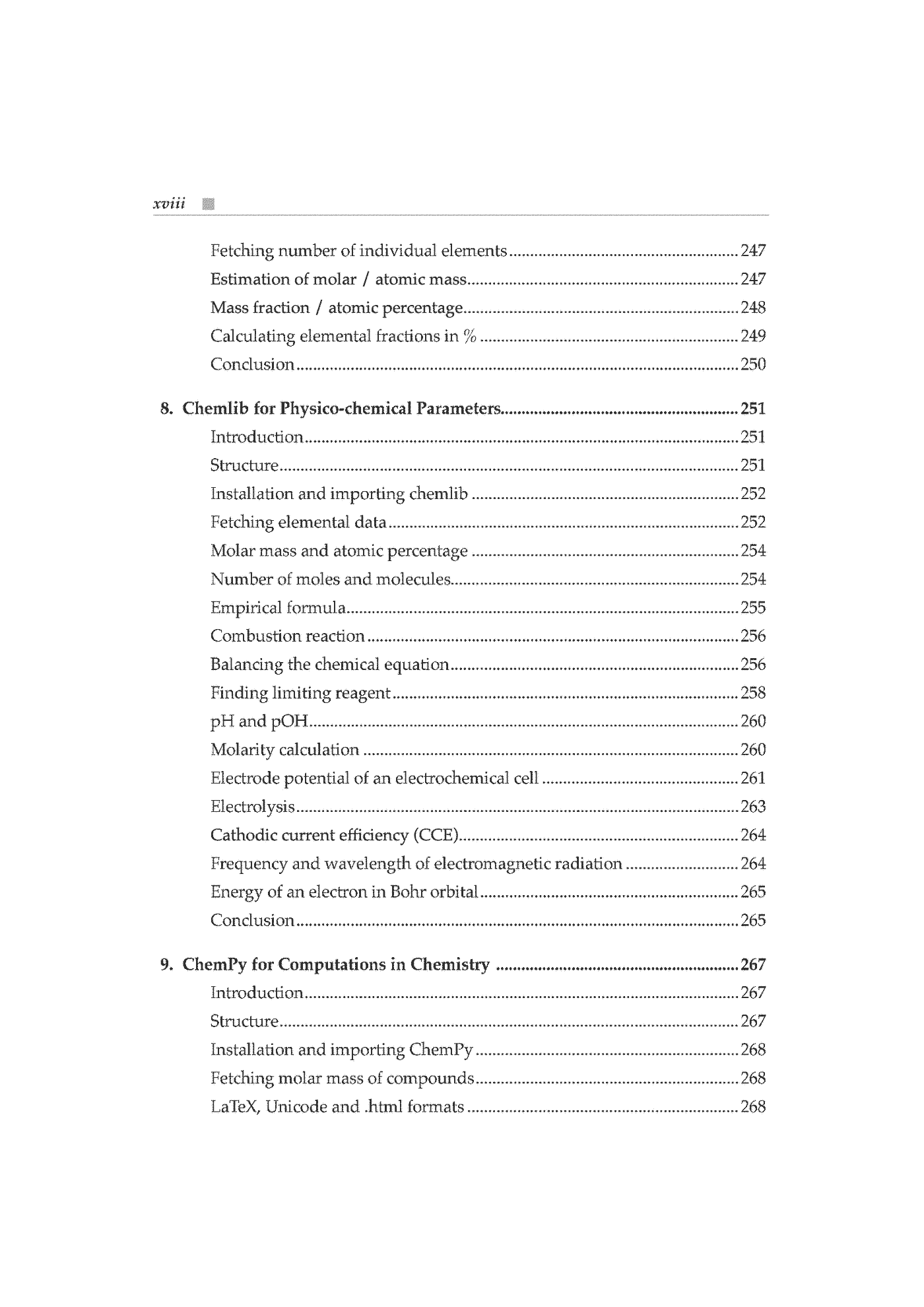
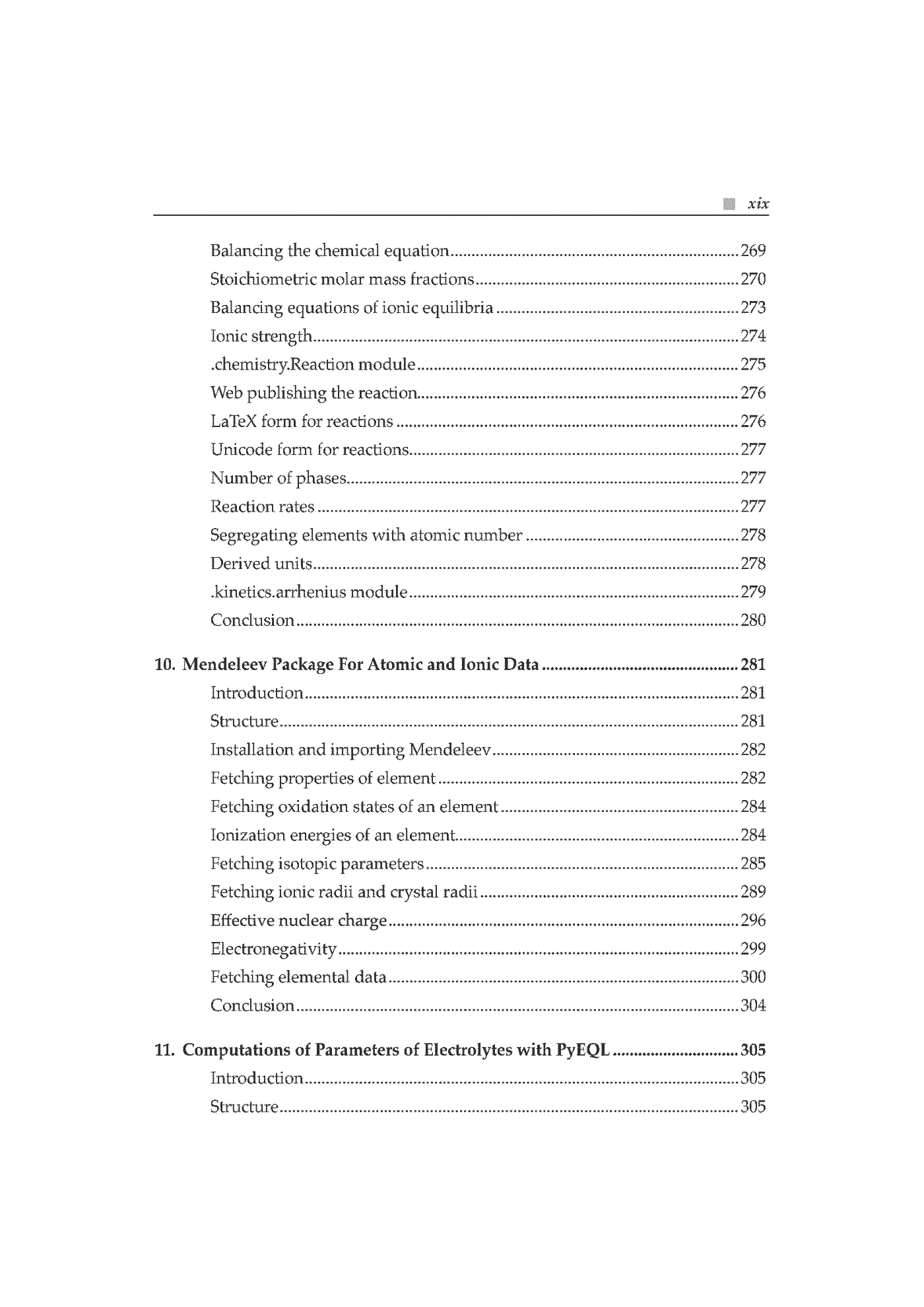
To fetch elemental, nuclear, atomic or molecular data with list or dictionary functions.
Understanding the algorithms for the computation of Thermodynamic, Electrochemical, Kinetics, Molecular and Spectral parameters.
Stoichiometrical calculation of the reactant and product coefficients from Matrices.
Symbolic computations with reference to Physical Chemistry.
With Matplotlib package, interpretation and plotting of the analyzed data in the desired graphical format.
With various cheminformatics modules, correlate the structure of complex and bulkier molecules.
WHO THIS BOOK IS FOR
This book is for Chemists, Chemical Engineers, Material Scientists, Bio-chemists, Biotechnologists, and Physicists. Students of Chemistry, Chemical Engineering, Materials Chemistry, Biochemistry, Biotechnology, and Physics will find this book resourceful.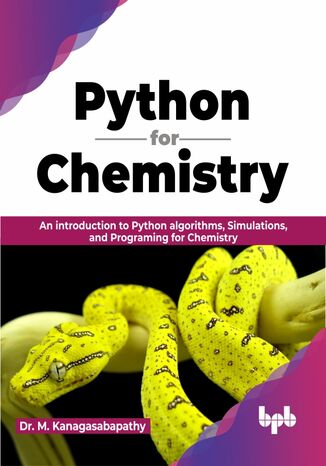
 1
 2
 3
 4
 5
 6
 7
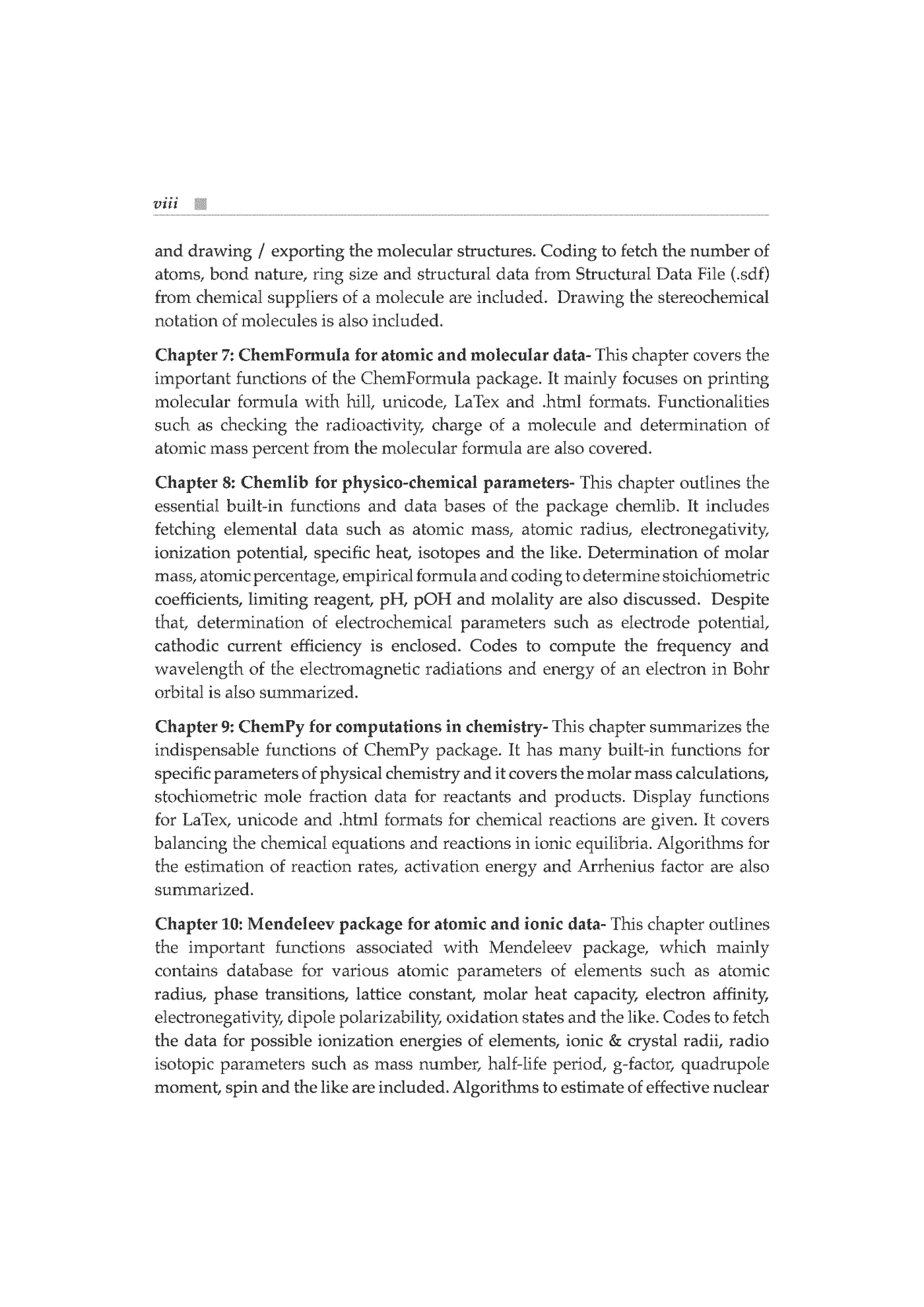 8
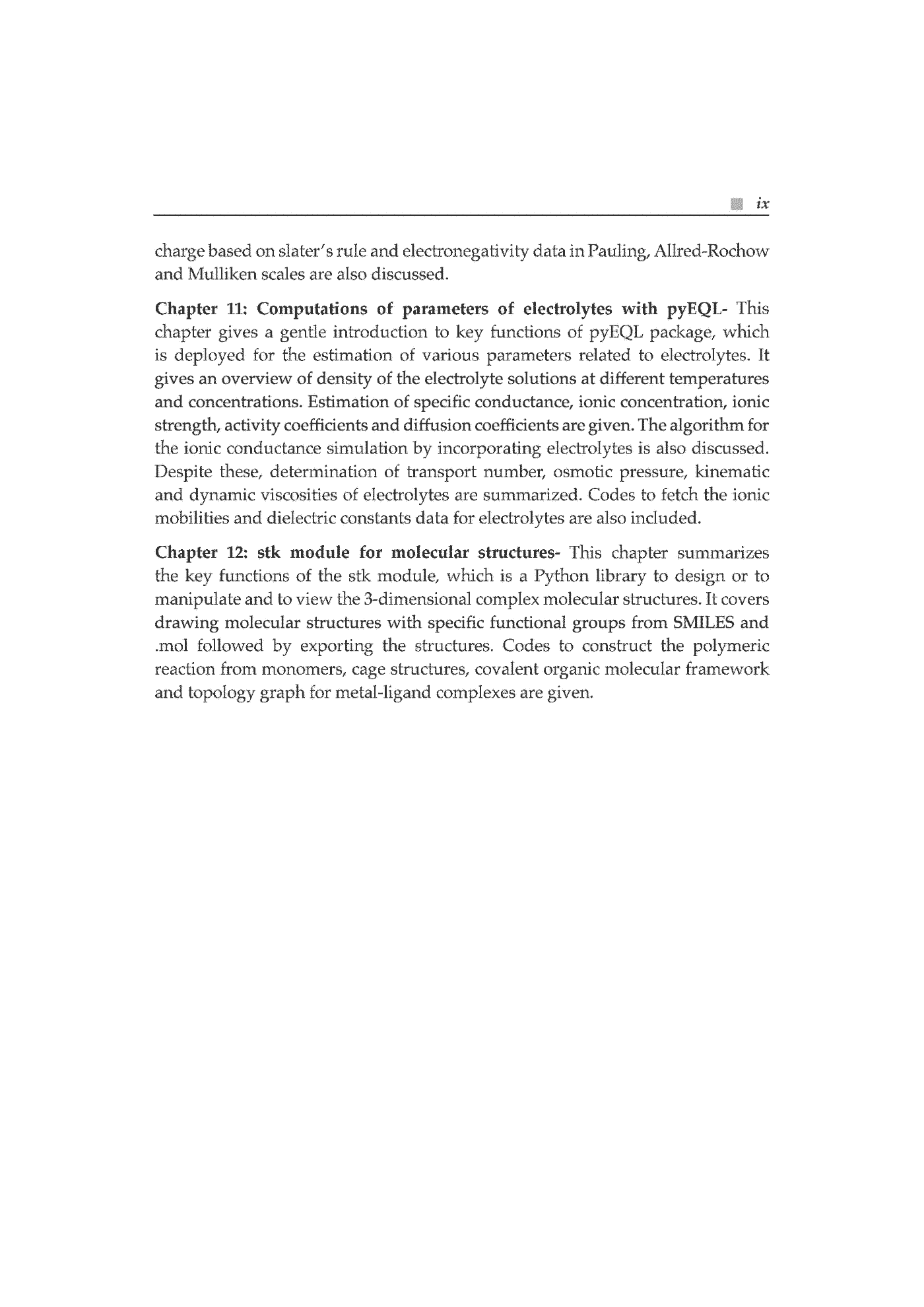 9
 10
 11
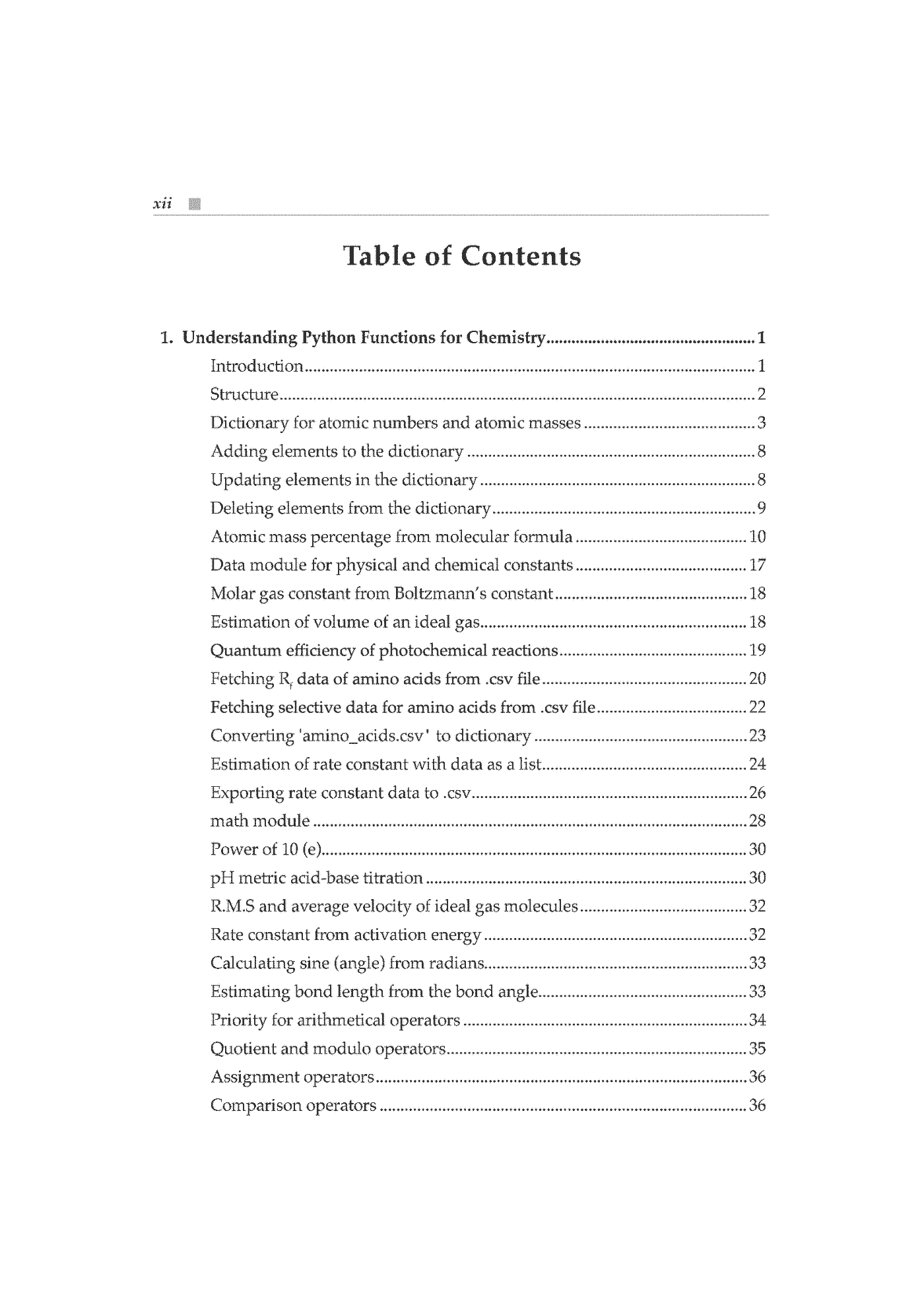 12
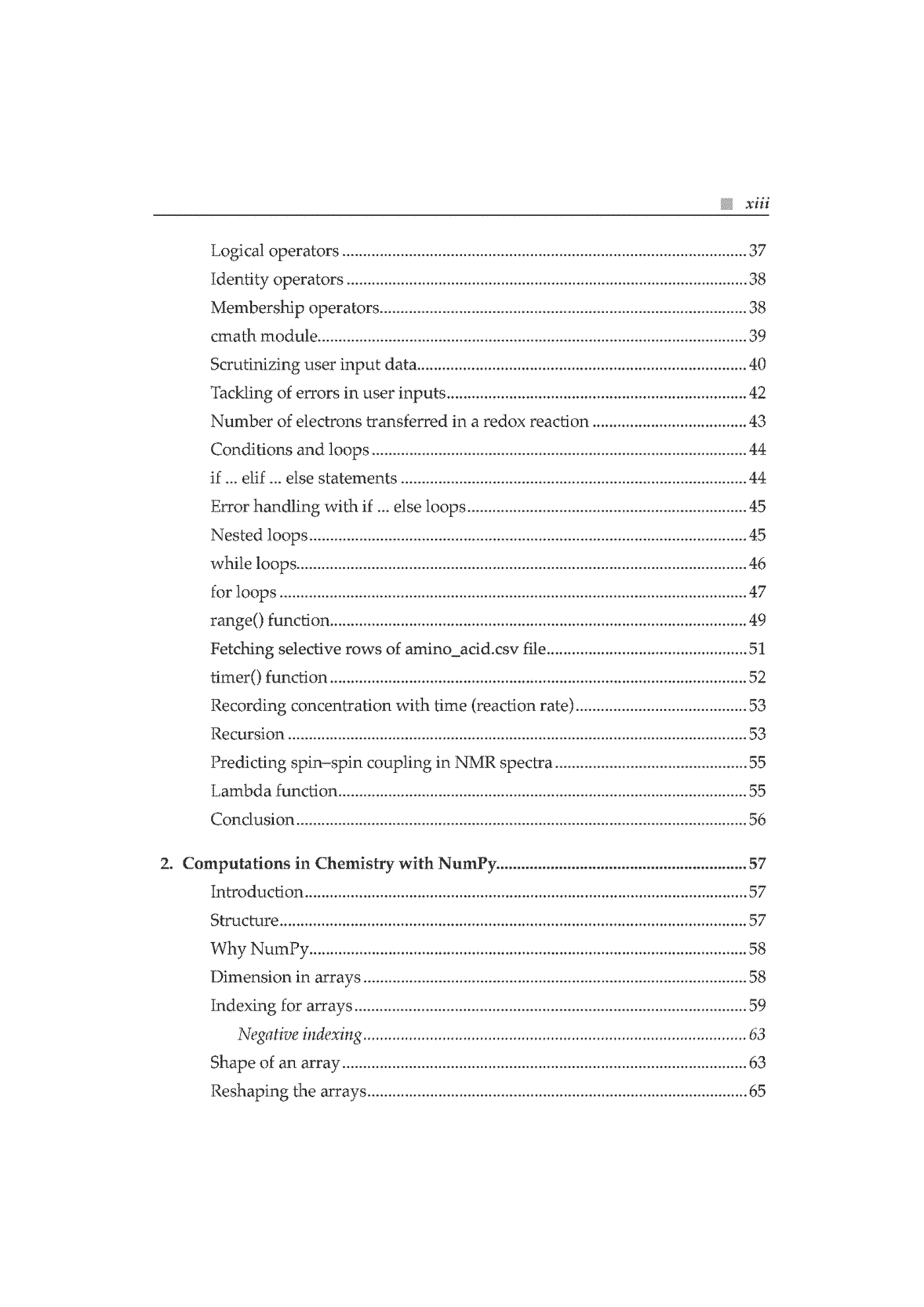 13
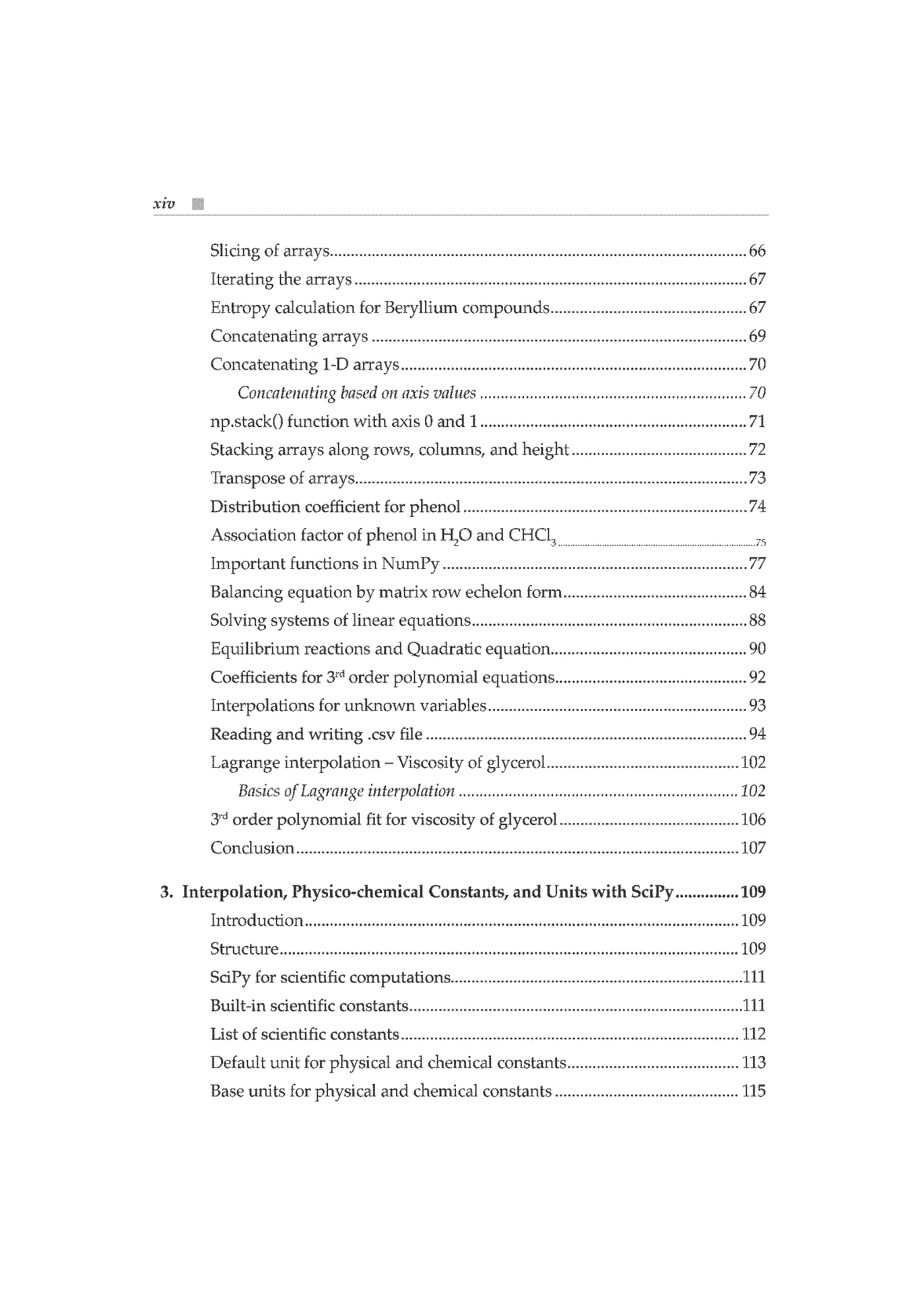 14
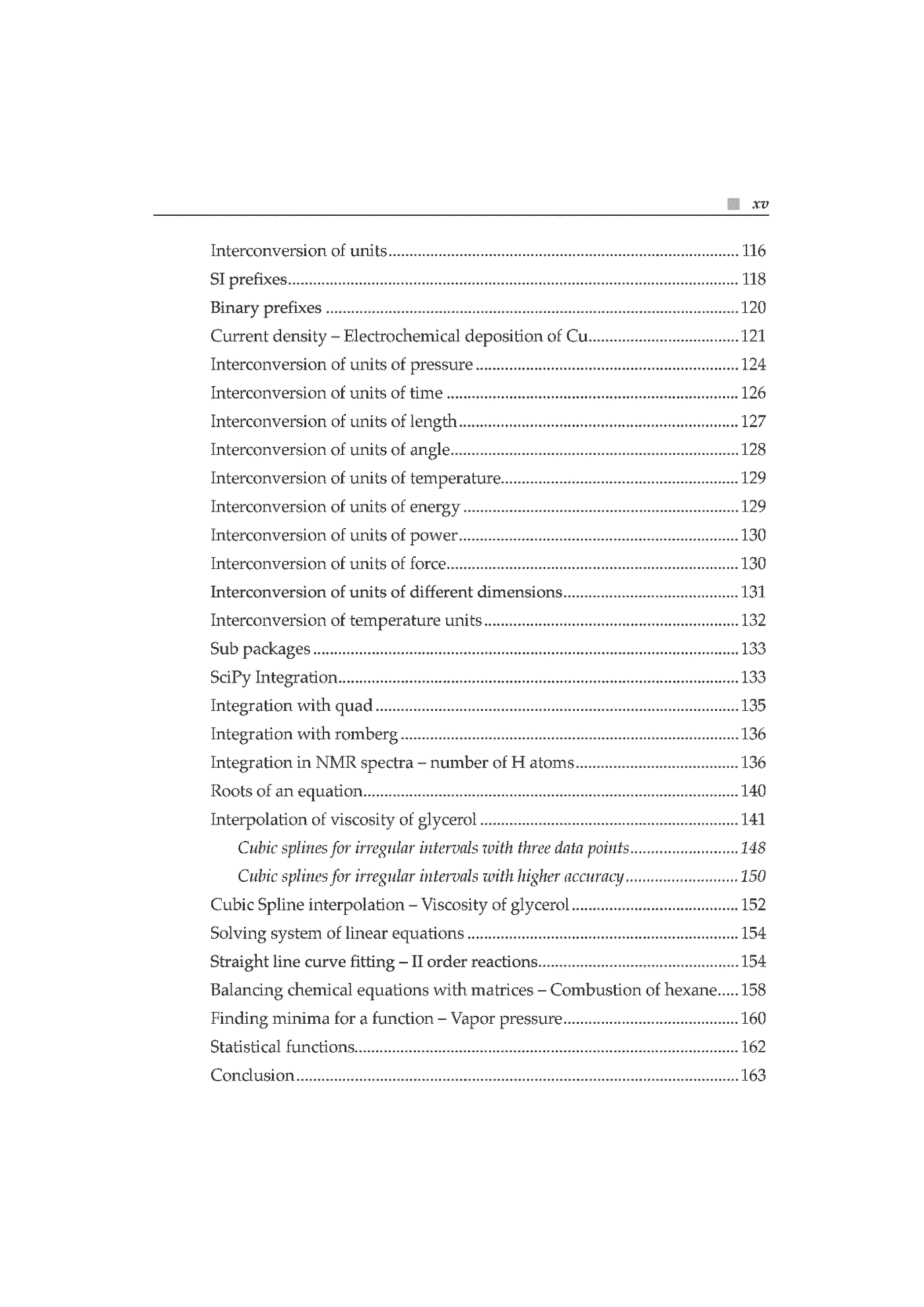 15
 16
 17
 18
 19
 20
 21
 22
 23
 24
 25
 26
 27
 28
 29
 30