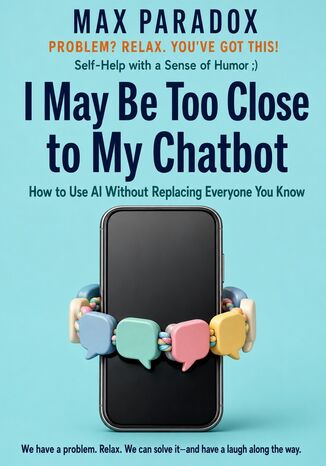
Fragment książki — 11 stron
Kliknij stronę, żeby powiększyć. Całość możesz przeczytać online albo pobrać jako PDF. Fragment udostępniony przez wydawcę.
 1
 2
 3
 4
 5
 6
 7
 8
 9
 10
 11
Opis
AI can write your emails, plan your vacation, explain your spreadsheet, help you make decisions, and patiently discuss the suspicious emotional meaning of a two-word text message at 1:14 in the morning.
Very convenient.
Possibly too convenient.
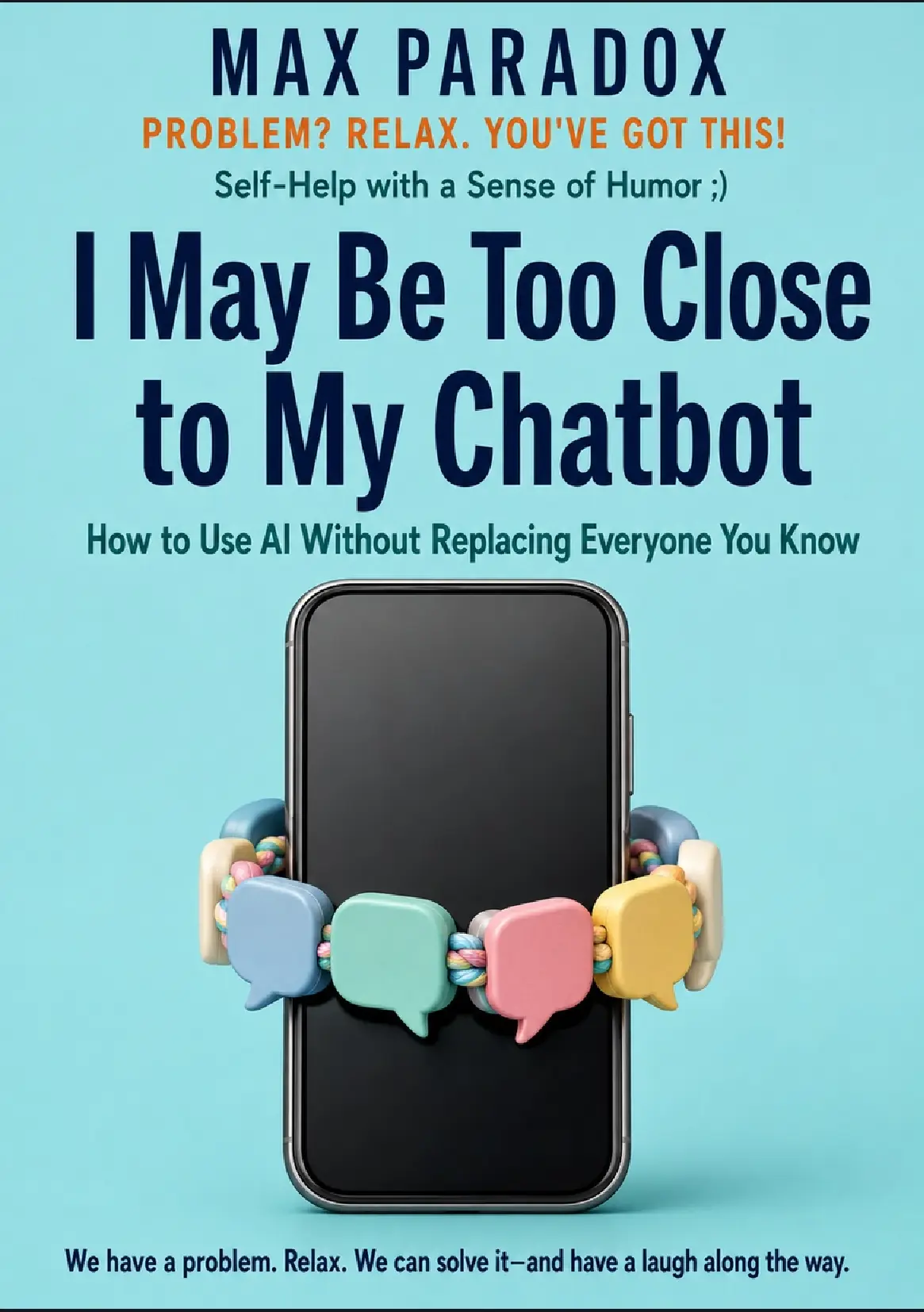
I May Be Too Close to My Chatbot: How to Use AI Without Replacing Everyone You Know is a practical, funny guide to using conversational AI without accidentally outsourcing your judgment, relationships, confidence, social skills, and entire emotional support network.
Max Paradox explores the strange new problem created by a tool that is always available, never too busy, never needs to leave for dinner, and can provide a polished answer before your best friend has located their phone.
The solution is not to delete AI, fear it, or move to a cabin with no Wi-Fi.
The solution is to give it the right job.
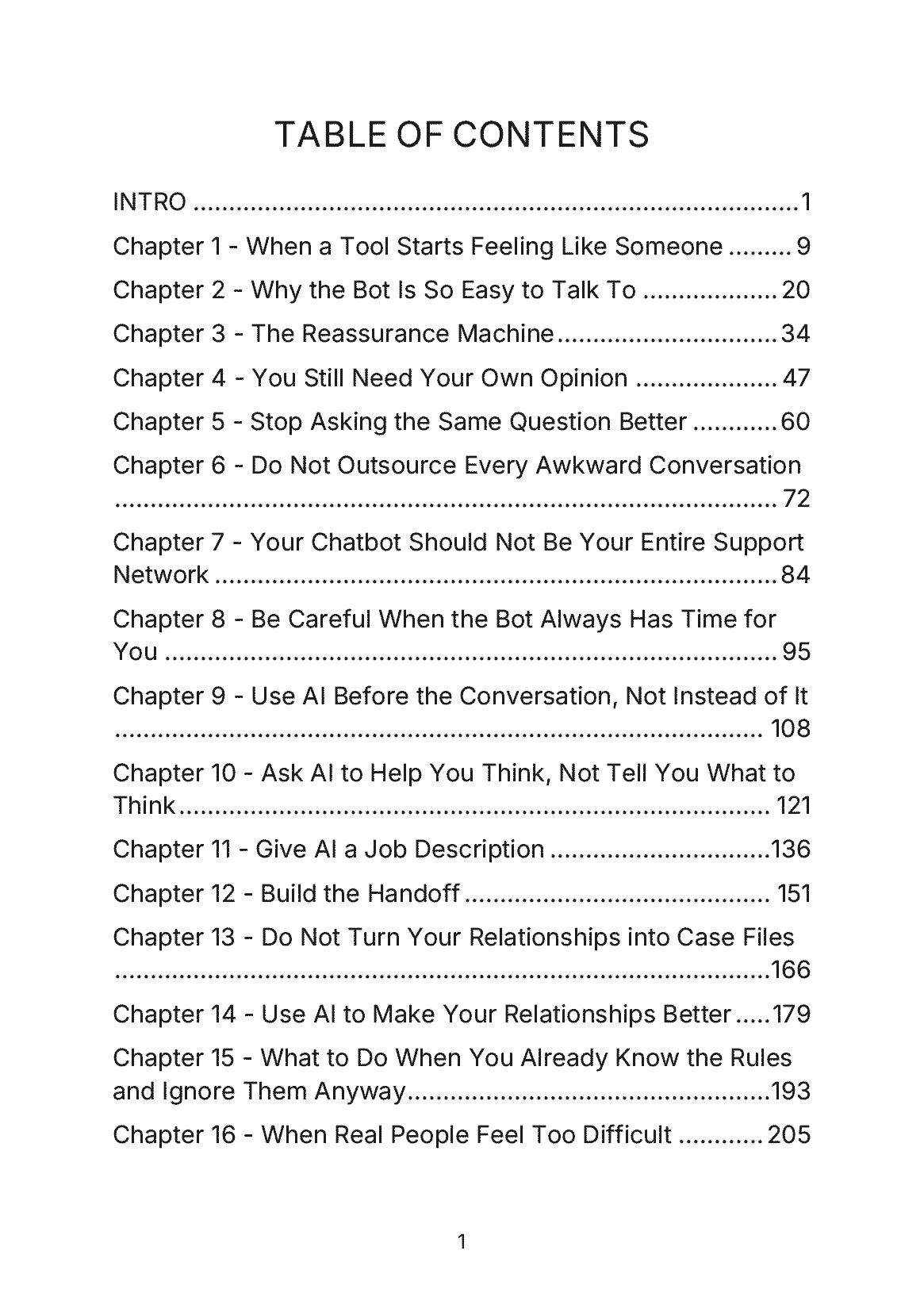
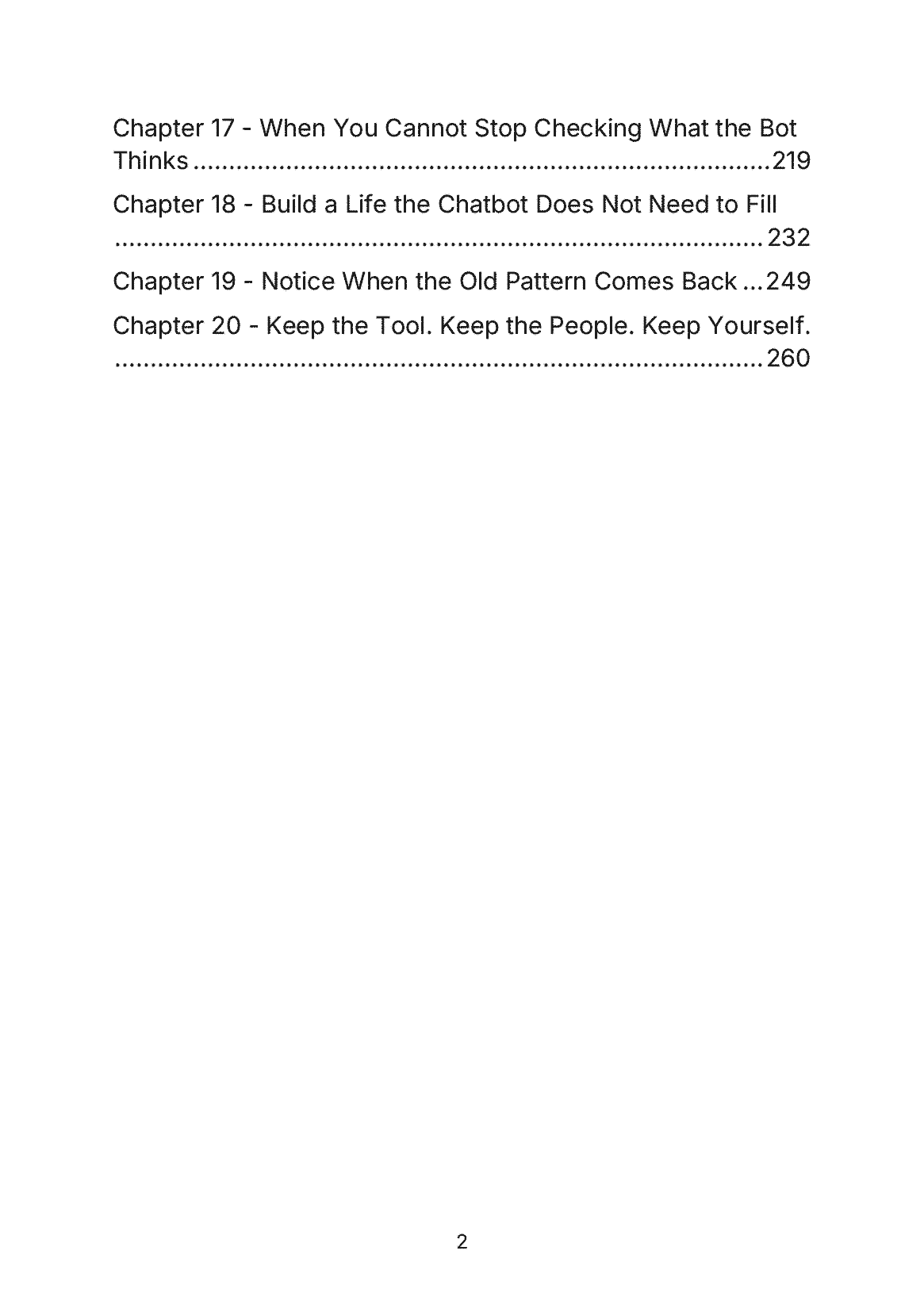
Inside, you will learn how to:
recognize when useful AI assistance is becoming substitution;
stop reassurance loops and repeated "Are you sure?" checking;
make decisions without requiring digital approval;
use AI to prepare difficult conversations instead of avoiding them;
separate facts, patterns, assumptions, and stories about other people;
preserve your own opinions before AI supplies a beautifully formatted one;
create human-first categories for the parts of life that need real relationships;
build practical handoffs from AI analysis to real-world action;
handle loneliness without making a chatbot your entire social infrastructure;
recognize early signs that old habits are returning;
use AI to strengthen relationships rather than quietly replace them.
This is not an anti-technology book. AI is extraordinarily useful, and pretending otherwise would be like banning calculators because someone once used one to divide ten by two.
Instead, this book gives you practical boundaries for keeping the best parts of AI while protecting the parts of life that only you-and the people around you-can actually live.
Expect concrete rules, realistic examples, minimum-effort versions for low-energy days, Plan B when the sensible method collapses on Wednesday, and enough observational comedy to make an uncomfortable number of your own habits recognizable.
Because the goal is not to use AI less merely for the sake of using AI less.
The goal is to use it better.
Let the chatbot organize the problem.
Then make the decision.
Have the conversation.
Call the friend.
And occasionally allow another human being to give you an imperfect answer without requesting a regeneration.
"This publication was prepared with the assistance of tools that support the creative process, including artificial intelligence-based solutions. The final concept, structure, and editing belong to the author."