Fragment książki — 11 stron
Kliknij stronę, żeby powiększyć. Całość możesz przeczytać online albo pobrać jako PDF. Fragment udostępniony przez wydawcę.
 1
 2
 3
 4
 5
 6
 7
 8
 9
 10
 11
Opis
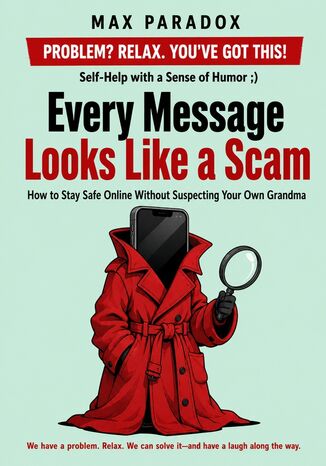
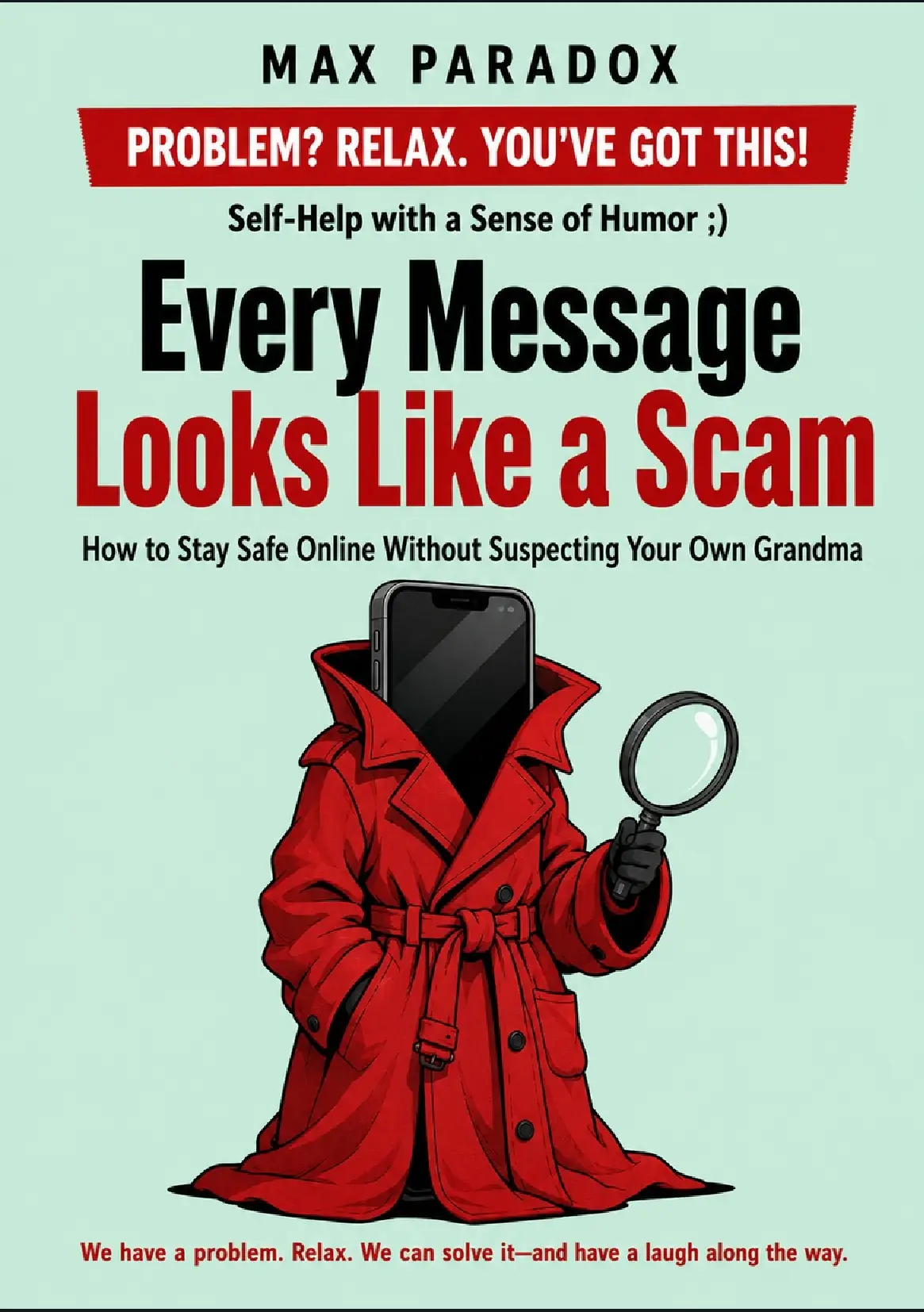
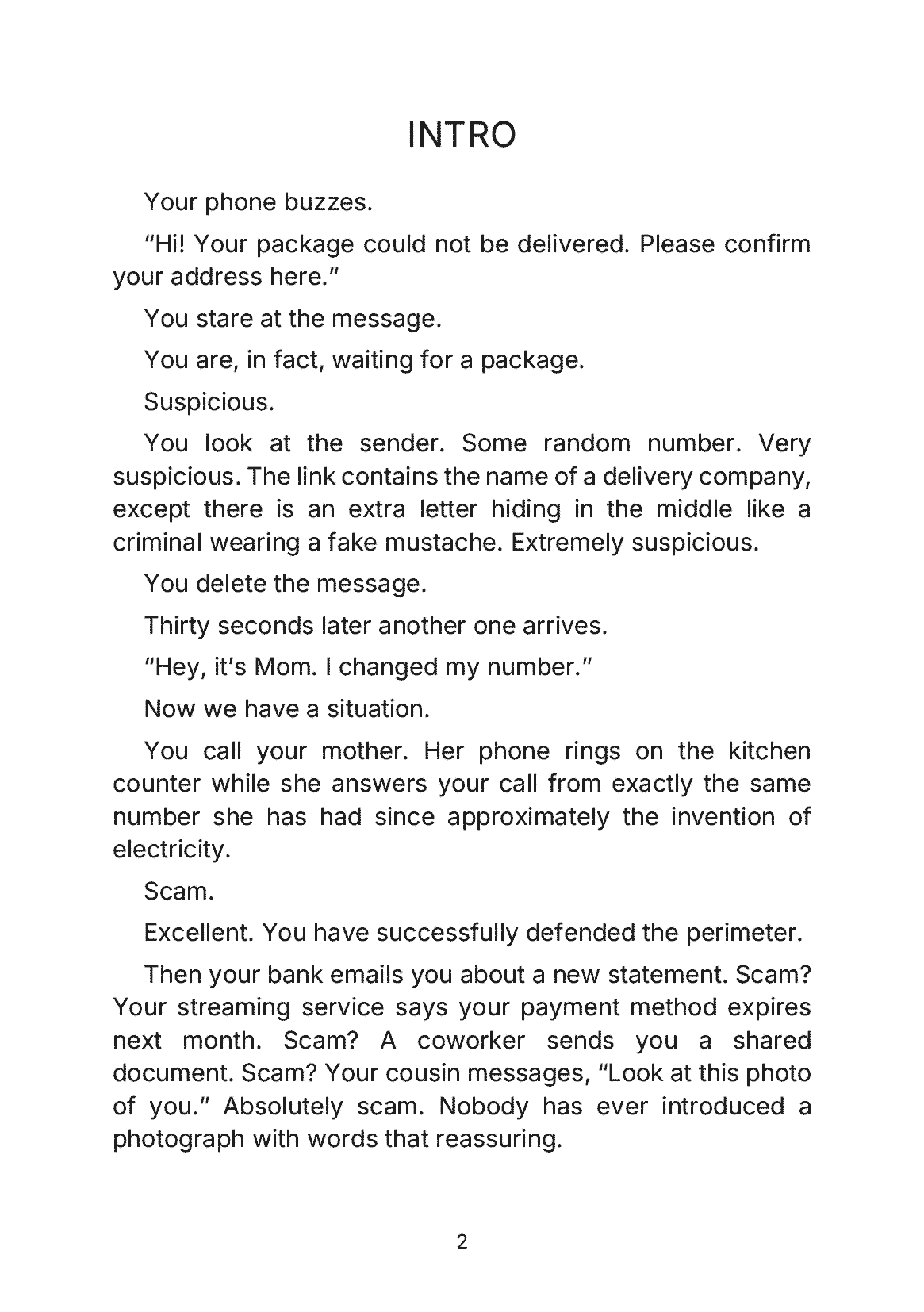
Every text looks suspicious. Every email has a link. Your bank wants you to verify something, your package has apparently entered a crisis, and someone claiming to be your child suddenly has a new phone number and urgently needs money.
Welcome to modern online life, where being cautious is sensible-but suspecting every notification of criminal intent is exhausting.
Every Message Looks Like a Scam is a practical, funny guide to staying safer online without turning yourself into a full-time digital detective. Max Paradox shows you how to stop guessing whether messages "look real" and instead use simple habits that work even when a scam is polished, personalized, and convincing.
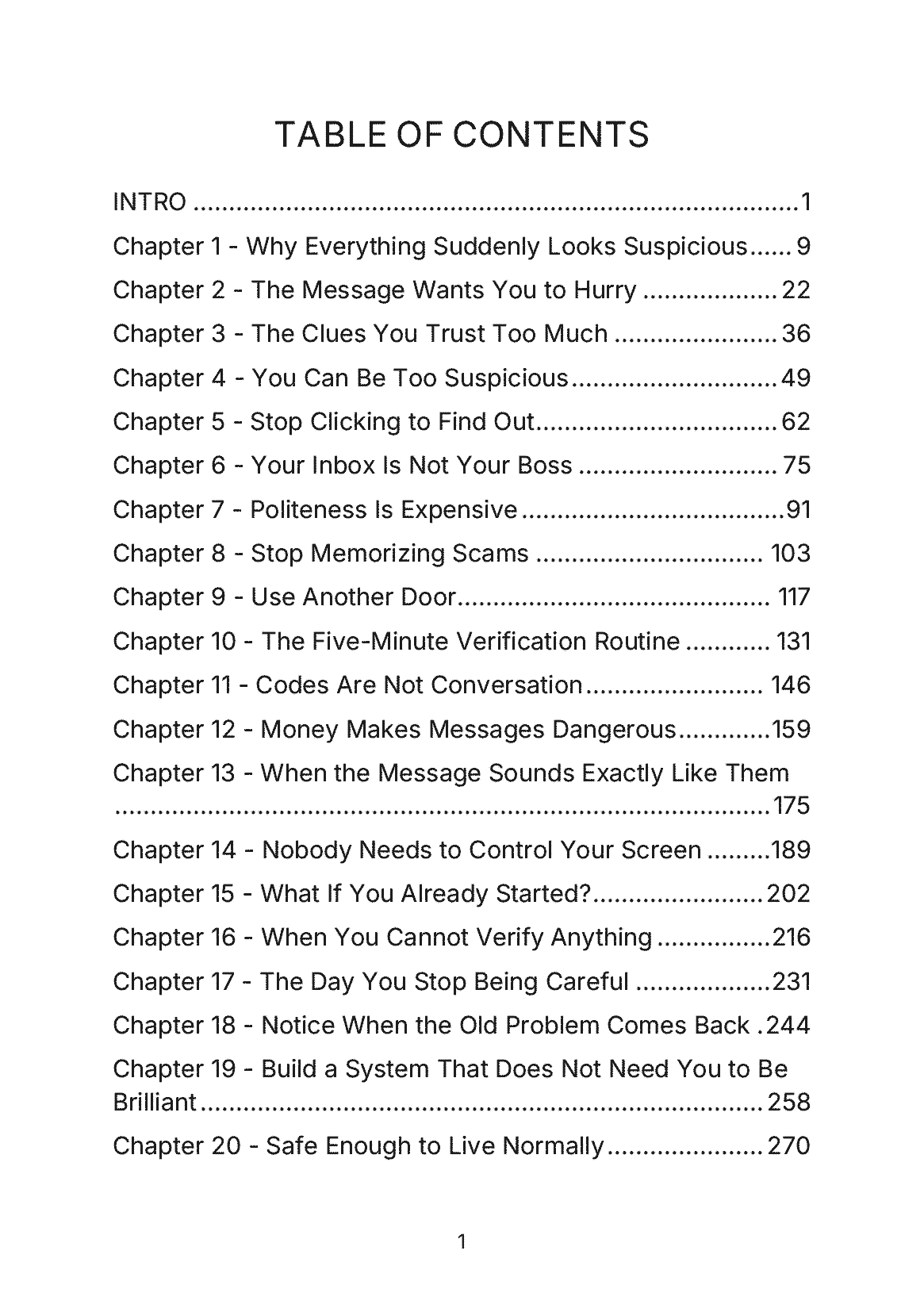
You will learn how to:
recognize the pressure tactics scammers use;
judge messages by the risk of the requested action;
handle suspicious links without playing URL detective;
verify bank, family, work, and account messages through trusted channels;
protect passwords, authentication codes, and important accounts;
respond to unusual payment requests and changed banking details;
handle fake support calls and remote-access requests;
verify urgent messages from family members, even when the voice sounds familiar;
know what to do when you cannot immediately verify a request;
react quickly if you already clicked, paid, shared a code, or granted access;
build a simple security system that still works when you are tired, distracted, or busy.
The method is deliberately uncomplicated. You do not need to memorize hundreds of scams or become an expert in phishing domains, deepfakes, browser certificates, and mysterious email headers. Instead, you will learn a repeatable process:
Stop. Leave. Verify.
Stop before the sensitive action. Leave the channel creating the pressure. Verify through an independent route you already trust.
Along the way, you will meet fake delivery notices, suspicious invoices, "urgent" bosses, helpful strangers, fake tech support, compromised accounts, desperate relatives, and more gift-card emergencies than any functioning economy should reasonably contain.
The result is not paranoia.
It is calm competence.
You will know when to slow down, when to ignore something, when to check elsewhere, when to call someone, and what to do if the mistake has already happened.
Because the goal is not to trust everything online.
The goal is not to fear everything either.
The goal is to make good decisions without treating every message from Grandma like evidence in an international cybercrime investigation.
"This publication was prepared with the assistance of tools that support the creative process, including artificial intelligence-based solutions. The final concept, structure, and editing belong to the author."